
A colocation data centre is just another physical facility that hosts computer hardware, servers, and other components. Additionally, it provides lease space to tenants looking for such infrastructure services. Various network providers, managed services providers, cloud providers, and enterprises opt for colocation services, hoping to trim down costs and improve efficiencies. Centralizing operations and an efficient architecture draw a lot of organizations to move to colocation data centres. Gartner has proclaimed that eighty percent of enterprises will shut down their traditional data centres by 2025.
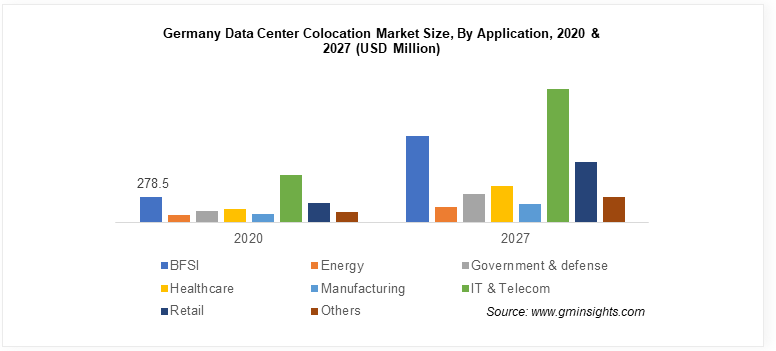
Image Credit : gminsights.com – Market size
Benefits of data centre colocation services:
- Reliability – Colocation can ensure a complete one hundred percent uptime and allows companies to focus on their core businesses instead of spending time managing infrastructure and the data centre. In our global era, there is the expectation that services be up and running around the clock as people all over the world remain connected to many services and applications. Even a minor disruption in the service makes the user base resort to social media to vent their frustration. Built-in redundancies and robust infrastructure will ensure the services are reliable when customers need them the most.
- Security and Compliance – This is and will continue to remain a significant concern for any organization. Your colocation provider should provide in-house security officers, who will need to ensure perimeter fencing, manage biometrics and work on keycard scanners.
- Ownership Cost – The overall costs come down due to the economies of scale when you get the services from a colocation provider. Multiple departments provide cost reductions like the overall power costs, networking costs, staff costs for security and day-to-day operations, and cooling costs. Apart from the basic one-time costs of setting up the infrastructure, all other associated costs can be reduced by companies to optimize their data centre colocation services. Operating a large data centre generally costs around 25 million a year. Such huge costs can be cut down by a considerable margin when employing colocation data centre services.
- Scalability – The colocation data centre has sufficient facilities to support customer growth, data growth, and future demand. Every time there is a merger or acquisition in the same geography or venturing into a new one, sufficient infrastructure support is always available in the colocation data centre.
- Interconnection – A colocation facility is a bubbling marketplace with an array of network, cloud, and service providers available to choose from. This gives business houses an edge in leveraging direct connections and optimizing the overall services offered.
- Hybrid cloud – Multiple cloud providers offer their services within a colocation facility. Companies can achieve performance benefits and cost savings by choosing the providers most beneficial to their needs and mutually gain in opting for colocation data centre services.
- Environmental impact – Data centres consume a lot of energy, with a big chunk of the power consumption required for cooling and ventilation systems. The environmental impact of the data centre and the carbon emission calculations need to be scrutinized before looking at other options, like a colocation data centre.
Types of a colocation data centre
- Retail colocation data centre – The space in the data centre housing, the racks and cabinets gets rented out to multiple businesses that can place their devices in the data centre for a specific period.
- Wholesale colocation data centre – The entire data centre is leased for a certain period. A single customer rents out the whole facility that any third-party data centre service provider owns.
Why do you need to move to a colocation data centre?
You can compare a warehouse to a colocation data centre, as it gets treated like a storage of different network and storage components. Like renting a home, you rent up space for your servers, routers, and related infrastructure within the data centre. The role of the colocation service provider is to maintain an optimized environment with sufficient power, connectivity, and security. Adequate power is essential to operate the backup of the equipment, ventilation systems, and power supply. In addition, physical and cyber security are both necessary and crucial elements that get supported in a colocation data centre. The company, however, should set up and control the devices.
Downtime generally means a business can no longer generate revenues, and the impact on the cash flow is immediate. The four tiers of the data centre help deal with unplanned outages and improve the overall reliability of operations. Tier 4 is more suitable when your company has mission-critical service offerings and cannot afford downtime. Tier 1 remains the most common option for businesses with essential services and is looking to make a cost-conscious decision in choosing data centre services.
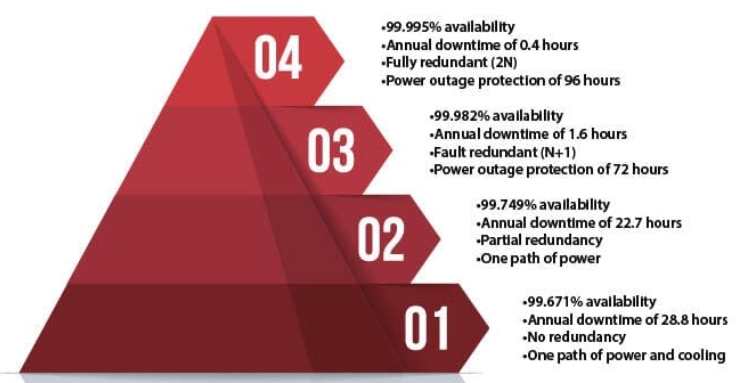
Image Credit : impactmybiz.com – Tiers of colocation
Choosing the right colocation data centre:
Several factors could influence the choice of the colocation data centre:
- Platform Size – When you need space for a few hundred servers or less, choosing a retail colocation data centre is more appropriate. However, a wholesale data centre would be best suited for companies with thousands of servers.
- Power & Cooling – A wholesale colocation data centre can support high-density computing for supercomputers and other dedicated compute engines. However, the retail data centre will have an upper limit in terms of power consumption and for the specific leased space or the facility as a whole.
- Connectivity – Wholesale providers will allow companies to bring their own internet service providers and there is added flexibility in terms of choosing niche players. However, the same level of flexibility for retail providers may not always be an option.
- Staff Accessibility – Physical security is high when you choose a wholesale facility, as access gets restricted to the staff from the company who are allowed into the facility. On the other hand, the retail colocation data centre will have employees from other companies that share the same space.
- Cost – Wholesale providers provide a lot of personalization that comes with additional costs. Retail providers will allow reduced costs based on the power and space every organization has signed up for.
If you are looking to lower your colocation costs, you can follow the below steps:
- The advantage of selecting a smaller data centre translates to lesser costs. Additionally, you can enjoy customized services and have familiar faces in the data centre who know you by name.
- The location of the data centre is essential. Suburbs have lesser rentals and real estate prices compared to the main cities. Even parking in a downtown location is an added cost. For example, a 200% price jump gets reported for renting space in New York instead of Miami for your data centre.
Additional features to look for in a data centre
- The facility should have sufficient power to run your server, HVAC, lighting, and other core components. You will get charged either a flat rate or a metered rate based on your usage in that particular geography.
- You may need a pair of technical hands to operate physically from the data centre. These could be monotonous tasks like flipping switches. Small charges can get levied for such routine tasks at a data centre.
- There could be other cases of hidden colocation fees that you may need to watch out for. These include bandwidth fees which may not be part of the package and come up as an add-on based on the speeds you might need. Also, there could be a one-time initial setup fee that your network provider will charge for setting up the infrastructure and any monthly maintenance costs on top of that. Lastly, you may need to lease a power distribution unit from your colocation data centre services provider if you already don’t own one.
Conclusion
Colocation should only sometimes be thought of as replacing your traditional data centre. It also suits companies that need to extend their businesses and partially use this kind of data centre services to meet their business objectives while keeping a check on costs. Many variables determine the final prices you need to consider when it comes to pricing. Firstly every company has its unique service offerings and specific needs. Physical space, power consumption, bandwidth required, and storage are the four pillars that broadly shape the cost structure for your colocation data centre needs. Setup fees, hand-holding, and managed services also can be bundled in and add to additional costs that companies might incur. Location, proximity to businesses, and natural disasters also influence the overall costs. Innovations are flourishing in the Data Centre-as-a-service (DCaaS) domain that helps organizations enjoy a shared responsibility in hosting and working alongside a third party. The dollar fifty-five billion data centre colocation market is expected to touch a whopping 145 billion dollars by 2027, expanding at a 15% compounded annual growth rate.